
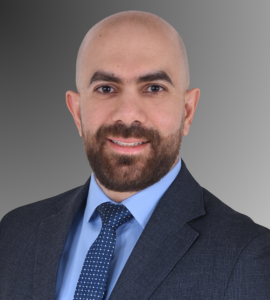
Industry Dialogue with Mohamed El-Fakharany
Chief Operating Officer, Barns
Saudi Arabia’s coffee industry is scaling fast, driven by café culture, local roasting, fast-casual growth and smarter operating models across the Kingdom.
In this Industry Dialogue, Mohamed El-Fakharany shares perspectives on the trends, opportunities and operational shifts shaping the future of Saudi Arabia’s coffee sector, and the growing role of platforms like CoffeeZone in connecting the industry.
Mohamed El-Fakharany is COO of Barns, Saudi Arabia’s largest homegrown coffee chain. With 20+ years across the GCC, he has played a key role in shaping the region’s modern F&B landscape, leading growth, expansion and operational transformation across fast-scaling consumer brands.
Read the full interview below:
1. What's driving growth right now for retail cafés, hospitality groups, or wholesale distribution?
Cafés are where the action is, and the numbers back up. Saudi Arabia's total POS transactions hit SAR 16.1 billion in a single week in the week ending March 7, well above the Kingdom’s typical weekly spending range of SAR 11-15 billion and among the strongest consumer spending weeks recorded in recent years with F&B taking the largest share.
QSR and Fast-Casual formats are pulling ahead of faster returns, and a model that franchisees actually want to invest in.
Retail gives you volume. Hospitality gives you a margin. The best operators I see are building for both.
2. What major shifts are shaping your priorities, and what is the biggest opportunity you see emerging from the current environment?
What worked five years ago is not enough today. Brands built on good locations and word of mouth are now going head to head with concepts designed around Generation Z , a consumer who forms an opinion before walking through the door, lives on short content, and notices immediately when the experience does not match the brand promise.
Technology is changing daily operations more than most people admit. AI inventory tools, automated brewing, and smarter scheduling are quietly closing the gap between cost pressure and quality delivery.
The opportunity I find most compelling is vertical integration. Own the roast, control the supply chain, extend the brand into retail. That moves you from running cafés to building a business that scales across borders and attracts serious capital.
3. Are you noticing a shift toward local roasteries versus imported finished products? Why?
Without question, and it goes deeper than sourcing preference. Saudi Arabia is making a deliberate move to own its coffee value chain. The Saudi Coffee Company is putting billions behind that vision over the next ten years that is not a pilot program, that is a national commitment. What surprises people is how strong demand stays despite everything pulling against it. Non-coffee alternatives are everywhere, bean prices keep climbing year on year, and yet coffee consumption in Saudi Arabia grows past 5% annually. Consumers are not switching out they are spending more. That tells your local roasting is not just a cost management decision. It is the right long-term position for fresher product, better margins, and far less exposure when global supply gets complicated.
4. How have your operating models evolved in response to recent regional dynamics, and which changes are proving most effective?
Business leaders nowadays are looking at actual numbers. Real-time productivity tracking and AI diagnostics at store level have changed how fast we catch problems and how early we can act before they show up in the financials.
The expansion looks different now, too. Opening locations was the priority for years, and it built strong networks. But certain markets are full, and the conversation has shifted toward getting more out of what already exists, better performance per location, smarter footprint decisions.
Supply chains are the issue of keeping operators in the market up at night. Dependence on imported equipment, packaging, and ingredients felt manageable until it was not. The disruptions of the past few years have pushed sourcing diversification and local supplier development from a future priority to an immediate one.
5. How do platforms like CoffeeZone at the Hotel and Hospitality Expo Saudi Arabia contribute to building relationships across the coffee value chain?
Some of the most valuable conversations we have had in this industry did not happen in a meeting room they happened walking an expo floor.
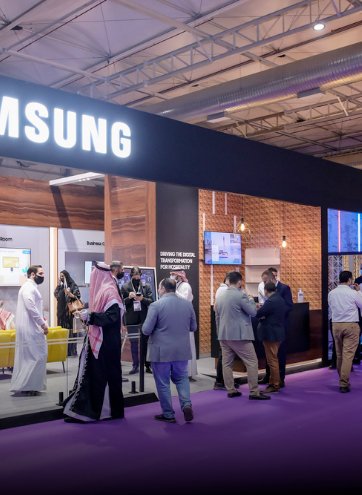
CoffeeZone puts everyone in direct contact with coffee bean traders, equipment suppliers, roasting partners, and investors in one place. Relationships that would take months to build through normal channels come together in a single day. For brands at the growth stage, that kind of access genuinely moves things forward.
Beyond the meetings when several exhibitors independently show up with the same concept or technology, that tells something worth paying attention to.