


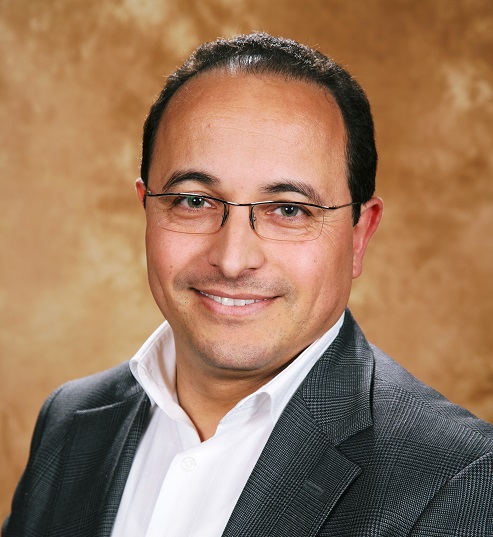
Industry Dialogue with Mr. Samy Boukhaled
Group Chief Hospitality Officer, BAAN Holding
Saudi Arabia’s hospitality sector is evolving at an unprecedented pace, driven by giga-projects, tourism diversification, infrastructure investment and a rapidly changing guest profile. As new destinations emerge and demand continues to grow, success is increasingly being shaped by strong partnerships, operational excellence and long-term market commitment.
In this edition of Industry Dialogue, a leadership series featuring the executives, operators and decision-makers shaping Saudi Arabia’s hospitality and F&B industries, Samy Boukhaled, Group Chief Hospitality Officer at BAAN Holding, shares perspectives on the market forces, opportunities and strategic priorities driving the Kingdom’s hospitality transformation.
Read the full interview below:
1. From your operational vantage point, what are the most significant shifts you've observed in guest profiles, ADR, and occupancy across your Saudi properties over the past 12–18 months, and what's driving them?
Over the past 12–18 months, Saudi Arabia’s hospitality market has undergone a structural transformation rather than a cyclical recovery. We are seeing a much more diversified guest mix, with domestic leisure, GCC travelers, corporate demand, government-related business, and international visitors all contributing to occupancy growth.
ADR growth has remained particularly strong in key gateway cities such as Riyadh (excluding the current situation in the region) due to limited quality supply versus accelerating demand generated by Vision 2030 initiatives, giga-projects, and major international events. Occupancy performance has also stabilized at healthy levels across several markets, but the biggest shift is the evolution in guest expectations. Travelers are now demanding lifestyle-driven experiences, stronger F&B concepts, digital integration, and locally inspired hospitality rather than standardized hotel products.
Another important trend is the growing importance of the domestic Saudi traveler, who has become far more sophisticated, quality-conscious, and experience-driven. This is fundamentally reshaping hotel positioning and commercial strategies across the Kingdom.
2. Which destinations within the Kingdom (Riyadh, Jeddah, AlUla, the Red Sea, NEOM, Diriyah, Makkah/Madinah) are showing the strongest performance fundamentals right now, and where do you see the next wave of demand emerging?
At present, Riyadh remains the strongest market in terms of business fundamentals, driven by government activity, regional headquarters expansion, corporate demand, and sustained international investment inflows. The city continues to benefit from strong ADR performance and year-round demand generators.
The religious tourism segment in Makkah and Madinah remains exceptionally resilient and offers long-term growth potential, especially with infrastructure expansion (Masar project in Makkah) and the Kingdom’s ambition to significantly increase pilgrim capacity.
The next wave of demand will likely emerge from integrated destination developments such as Diriyah, The Red Sea, NEOM, and AlUla. These destinations are not only tourism projects; they are building entirely new demand ecosystems combining culture, luxury, sustainability, entertainment, and lifestyle experiences.
3. What are your top three procurement and supply-chain pain points today; whether FF&E, OS&E, technology, or talent, and where are gaps that suppliers and brands could realistically fill?
The first challenge is lead time unpredictability, particularly for FF&E and OS&E procurement. Many hospitality projects in Saudi Arabia are developing simultaneously, creating pressure on manufacturing capacity, shipping timelines, and installation schedules.
The second challenge is localization and after-sales support. Several international suppliers still underestimate the operational importance of having strong local technical support, spare parts availability, and responsive maintenance capabilities inside the Kingdom.
The third and probably most critical challenge is talent availability, especially operational leadership talent with Saudi market experience. While infrastructure investment is accelerating rapidly, human capital development still needs to scale at the same pace.
There is a major opportunity for suppliers and brands that can provide integrated solutions rather than simply products, particularly smart hospitality technology, energy optimization systems, procurement efficiency platforms, and workforce development partnerships.
4. How is the rise of homegrown Saudi hospitality brands reshaping competition, partnerships, and white-space opportunities for international operators?
The rise of Saudi hospitality brands is creating a healthier and more mature market ecosystem. Local brands understand the culture, guest behavior, domestic travel patterns, and operational realities of the Saudi market in ways that international operators are still learning.
This evolution is shifting the market from a pure “brand import” model toward more balanced partnerships where international expertise must align with local relevance. We are increasingly seeing opportunities for hybrid models combining international standards with Saudi operational understanding and cultural authenticity.
For international operators, the white-space opportunity is no longer simply opening hotels in Saudi Arabia. The real opportunity is building flexible partnership models, adapting brand standards to local expectations, and participating in the long-term transformation of the sector rather than applying a traditional regional expansion template.
5. What types of partnerships, suppliers, or product innovations will move the needle for your properties in the next 12-24 months?
Three areas will have the biggest impact over the next 12–24 months.
First, technology partnerships focused on operational efficiency, AI-driven revenue management, guest personalization, and integrated data analytics will become increasingly important as competition intensifies.
Second, sustainability-focused solutions will play a major role, especially around energy management, water optimization and waste reduction. Owners are becoming far more focused on operational efficiency and long-term asset sustainability.
Third, experience-driven partnerships will be critical. Hotels can no longer compete purely on rooms inventory. Partnerships related to wellness, entertainment, destination experiences, curated F&B concepts, and local cultural programming will increasingly differentiate successful properties.
6. If a brand or supplier is considering entering the Saudi market for the first time, what's the one piece of advice you'd give them, and why is now the moment to act?
My advice would be simple: enter Saudi Arabia with a long-term strategic mindset, not with a short-term opportunistic approach.
The Saudi market is moving incredibly fast, but success here requires commitment, adaptability, local partnerships, and a deep understanding of the market’s cultural and operational dynamics. Companies that try to replicate strategies from other regions without localization will struggle.
Now is the right moment because Saudi Arabia is not just expanding hotel inventory; it is redefining the future of hospitality in the region. The scale of investment, infrastructure transformation, tourism diversification, and regulatory support creates a once-in-a-generation growth opportunity.
7. How do events such as Hotel & Hospitality Expo support your ability to source partners, solutions, and new ideas?
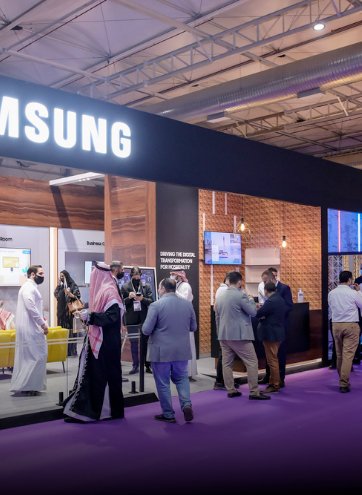
Events such as the Hotel & Hospitality Expo Saudi Arabia are extremely valuable because they bring together owners, operators, developers, suppliers, investors, and innovators under one platform.
For hospitality leaders, these events are not only about sourcing products. They provide strategic visibility into market trends, emerging technologies, operational innovations, and evolving guest expectations. They also accelerate relationship-building and create opportunities for collaboration that would normally take months to establish.
Most importantly, these platforms support knowledge exchange at a time when the Saudi hospitality market is evolving at an unprecedented speed.