
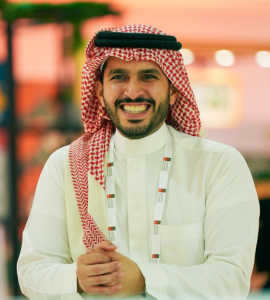
Industry Dialogue with Osamah Mohamed Ali Alawwam
Founder & Managing Partner, Roasting House
Saudi Arabia's coffee industry is evolving into a connected ecosystem where cafés, hospitality operators, roasters and distributors are increasingly working together to drive growth. As the market matures, businesses are focusing on quality, supply chain resilience, local value creation and long-term scalability.
In this edition of Industry Dialogue, a leadership series featuring the executives, operators and decision-makers shaping Saudi Arabia's hospitality and F&B industries, Osamah Mohamed Ali Alawwam, Founder & Managing Partner of Roasting House, shares perspectives on the trends shaping the Kingdom's coffee sector and the opportunities emerging across the value chain.
Read the full interview below:
1. What’s driving growth right now - retail cafés, hospitality groups, or wholesale distribution?
Growth is being driven by a strong combination of all three, with retail cafés leading consumer engagement and brand building, particularly in major cities like Riyadh. Hospitality groups are playing a critical role through structured expansion and consistent demand, while wholesale distribution is accelerating to support both segments at scale. Specialty coffee remains the key growth engine, raising quality standards and influencing purchasing behavior. This integrated growth across channels reflects a maturing market where a single segment no longer drives demand, but by a well-connected ecosystem that supports innovation, consistency, and scalability.
2. What major key shifts are shaping your priorities and the biggest opportunity you see emerging from the current environment?
The market is shifting toward quality consistency, supply chain resilience, and localized value creation. There is also a clear move from transactional offerings to experience-driven concepts, where storytelling and customer engagement play a central role. Our priorities are increasingly focused on building integrated capabilities across sourcing, roasting, and distribution. The biggest opportunity lies in leveraging Saudi Arabia’s investment in local coffee cultivation and production, which can strengthen national identity, reduce dependency on imports, and create a more sustainable, vertically integrated coffee ecosystem.
3. Are you noticing a shift towards local roasteries vs imported finished products? Why?
Yes, there is a noticeable shift toward local roasteries. Businesses are prioritizing freshness, flexibility, and the ability to customize blends based on market preferences. Local roasting also allows for better quality control and faster response to changing consumer trends. In addition, government initiatives supporting local industries are encouraging companies to invest in domestic capabilities. This shift is not only operationally beneficial but also strategically important, as it helps build stronger local brands and reduces reliance on imported finished products.
4. How have your operating models evolved in response to recent regional dynamics, and which changes are proving most effective?
Operating models have become more agile and diversified. Many businesses now adopt hybrid models that integrate retail, wholesale, and e-commerce channels to balance risk and capture broader market opportunities. There is also a stronger focus on supply chain optimization, strategic sourcing, and maintaining healthy inventory levels. The most effective changes have been investing in local capabilities, strengthening supplier partnerships, and using data-driven insights to improve decision-making. These adjustments have enhanced operational resilience while supporting sustainable growth.
5. How do platforms like CoffeeZone at the Hotel & Hospitality Expo contribute to building relationships across the coffee value chain? And what value do you see in them?
Platforms like CoffeeZone play a vital role in connecting stakeholders across the coffee value chain. They create opportunities for collaboration between suppliers, roasters, hospitality operators, and investors. Such platforms facilitate knowledge exchange, showcase industry innovations, and help businesses stay aligned with emerging trends. Their real value lies in accelerating partnerships and enabling direct engagement within a rapidly growing market like Saudi Arabia. They also help strengthen the overall ecosystem by bringing visibility and structure to the industry.